




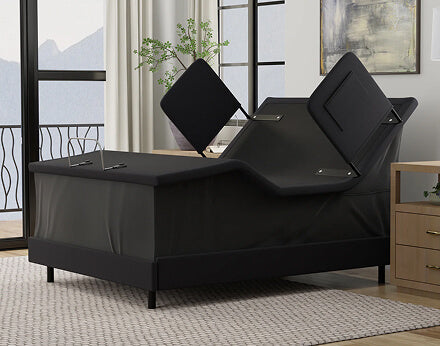




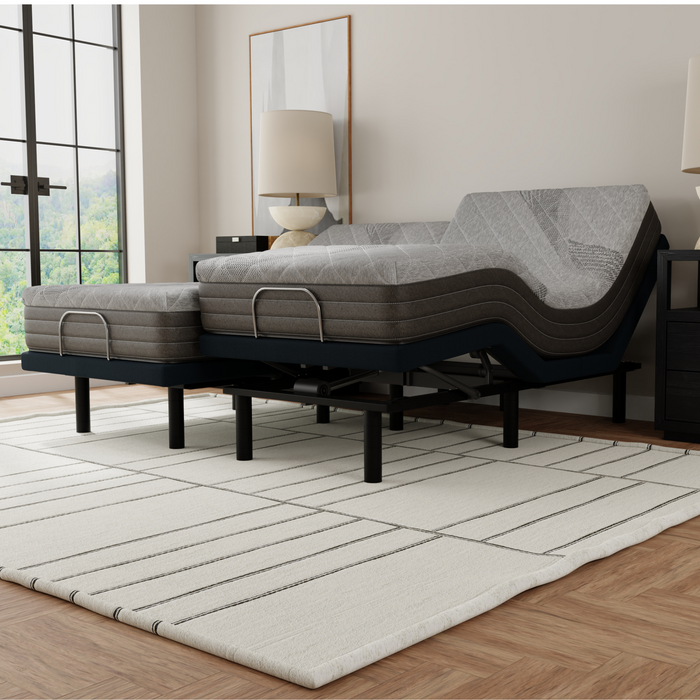
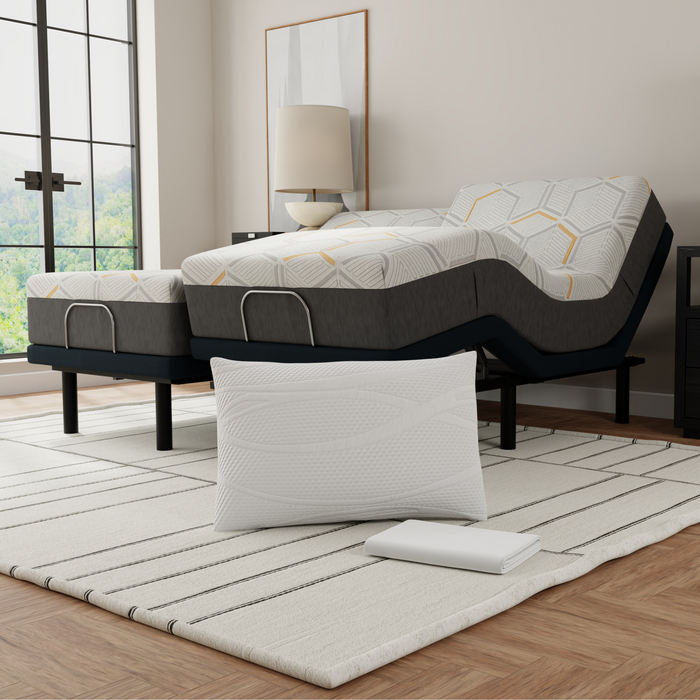
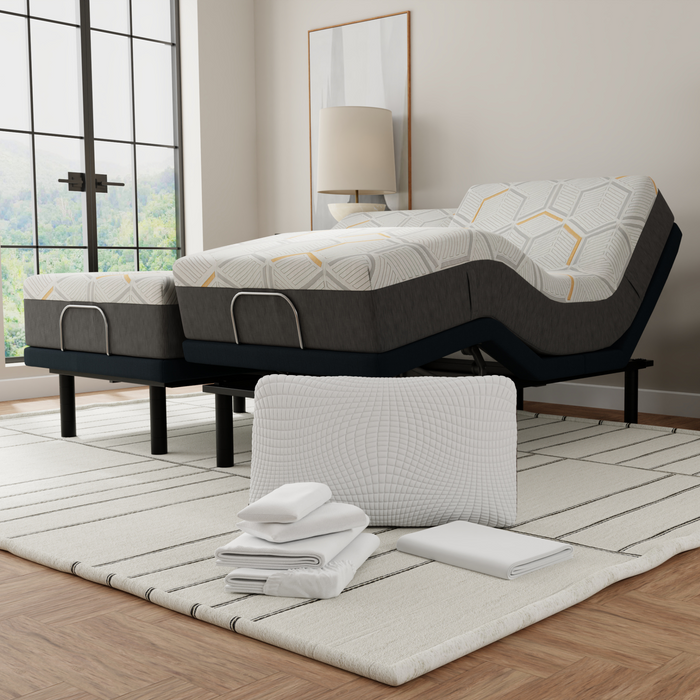
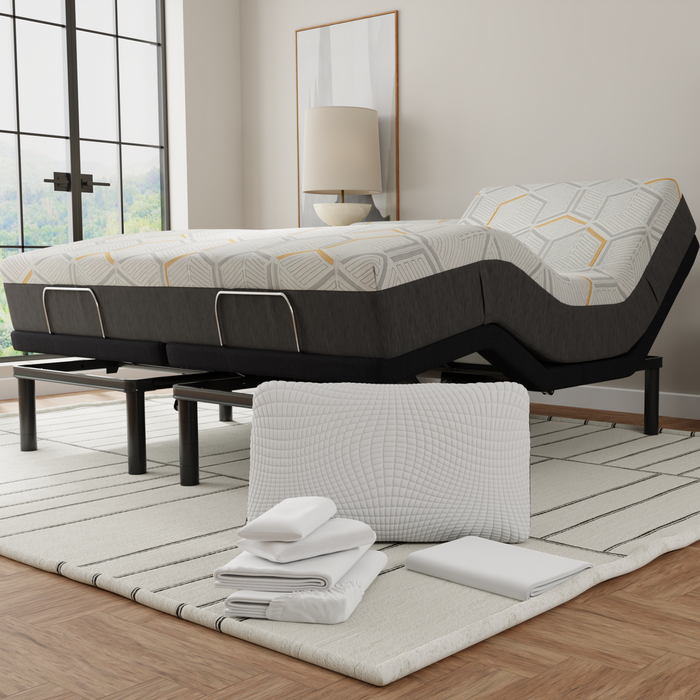
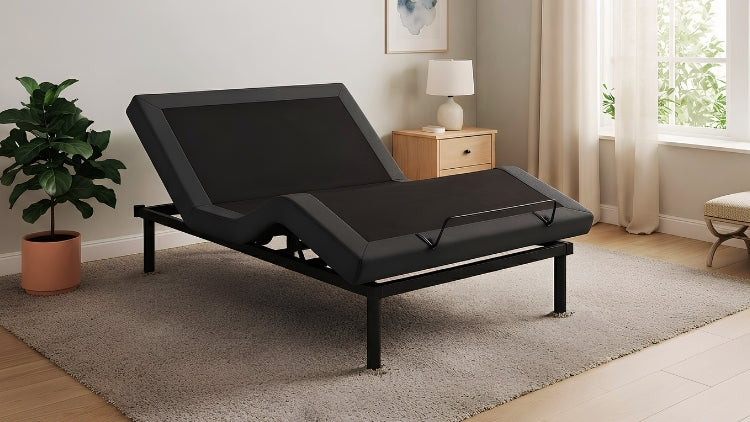
Can you use an adjustable bed on carpet? Yes, and it's one of the more common setups, since most bedrooms have carpet rather than bare flooring. The base itself doesn't require a specific floor type to function, but carpet type and a few setup details matter more here than they do on a hard surface.
In this guide, we cover how different carpet types affect stability, the most common setup problems, and the steps to get your base level and protection from day one.
Can an Adjustable Bed Frame Sit Directly on Carpet?
An adjustable bed base does not require a hard floor underneath it. The motor and lifting mechanism work independently of the flooring, so the base lifts, inclines, and holds weight the same whether it sits on carpet, hardwood, or tile.
What carpet does affect is stability. A base needs all of its legs bearing weight evenly to avoid wobbling during head or foot adjustments. Carpet compresses slightly under each leg, and how much it compresses depends on the carpet itself, which is why carpet type matters more than most people assume, and it's one of the things to know before buying alongside weight capacity and mattress compatibility.
How Carpet Type Affects an Adjustable Bed Base

Low-pile Carpet
Low-pile and berber carpet behave close to hardwood, since there's minimal compression under the legs. Leveling during setup is straightforward, and the base rarely needs rechecking once it's placed.
Plush or High-pile Carpet
Thicker, plush carpet compresses more under weight, which can make an otherwise level base feel slightly uneven once the mattress and sleepers are added. It's worth checking the base's level after it's fully loaded, not just during initial placement.
Carpet with Thick Padding
Carpet padding underneath the fibers can shift slightly over months of sustained weight, even if the carpet itself is low-pile. This is the setup most likely to need periodic rechecking, since the padding compresses gradually rather than all at once.
How to Set Up an Adjustable Bed on Carpet Safely
Getting the setup right the first time means fewer surprises once you're using an adjustable bed day to day, from leveling to floor protection.
1. Choose a Flat and Clear Location
Pick a spot on the carpet without visible dips, seams, or uneven padding underneath. Beyond the carpet surface itself, adjustable bed placement in the room affects clearance for the head and foot incline, so it's worth confirming there's enough open space around the base before locking in a spot. Avoid placing legs directly over a carpet seam, which compresses unevenly compared to the surrounding area. Choosing the location carefully upfront also keeps setup on track, since repositioning after assembly takes longer than getting it right the first time.
2. Check Leg Contact Before Adding the Mattress
With the base assembled but before the mattress goes on, check that all legs sit flush against the carpet. It's easier to spot an uneven leg now than after the full weight of the mattress and sleepers is added, and knowing what the legs and brackets are actually supposed to look like when properly seated makes it easier to catch a problem early.
3. Add Floor Protection Pads
Felt or rubber pads under each leg spread the weight over a wider area, which keeps the legs from digging into the carpet fibers or crushing the padding underneath over months of use.
4. Test the Base Before Full Use
Once the mattress is on, run the base through its full range of motion and check for wobble or resistance. Catching an unlevel leg now is easier than troubleshooting it after weeks of regular use.
Setting Up an Adjustable Bed on Carpet: What to Check Over Time

Setup gets the base level on day one, but carpet, especially padded or high-pile carpet, can shift slightly as it settles under sustained weight. A few things are worth checking periodically after the base has been in use for a while:
-
Leveling. Recheck every few months, since padding compression happens gradually rather than all at once
-
Floor protection pads. Confirm they haven't shifted out of place or compressed unevenly under one leg more than others
-
Carpet condition under each leg. Look for matting or crushed fibers, a sign the weight isn't distributing evenly and the pads may need repositioning
- Range of motion. Run the base through a full cycle occasionally to catch any new resistance or wobble that wasn't there at initial setup
Common Problems with Using an Adjustable Bed on Carpet
Most issues that come up on carpet trace back to setup rather than the carpet itself, and they tend to follow the same general troubleshooting patterns as any adjustable base; carpet just makes a couple of them more noticeable.
-
Wobbling. This almost always means one or more legs aren't making full, even contact with the carpet, usually caught during the first few uses rather than at initial setup.
-
Gradual unleveling. On padded or high-pile carpet, the base can feel level at setup but shift slightly as the padding compresses over the following weeks.
-
Carpet fiber damage. Legs bearing concentrated weight can crush or matte carpet fibers over time, especially without any floor protection underneath.
- Damage from moving the base. Scooting or dragging the base across carpet, rather than lifting it, puts stress on the leg brackets where they attach to the frame. This falls under the broader list of adjustable base handling mistakes that apply regardless of flooring, though carpet raises the stakes since legs can catch or drag against the fibers.
Final Thought
Can you use an adjustable bed on carpet? Yes, and for most bedrooms it's the default setup rather than an exception. The base performs identically regardless of flooring, the real variable is carpet type and how closely you check leveling during setup. Handle the base carefully, never scoot it, and add floor protection, and carpet works just as well as any other flooring, whether you're working with a premium base or one of the more budget-friendly adjustable base options on the market.
Get Your Adjustable Bed Set Up Right the First Time
A properly leveled base on carpet performs exactly like one on hardwood, and getting the setup right from the start saves you from troubleshooting wobble or noise later. Blissful Nights builds adjustable bases designed to work reliably across flooring types, from low-pile carpet to hardwood.
Contact us for sleep products built to fit your bedroom setup, or reach out to find a base that matches your space and sleep needs.
FAQs
Do adjustable beds need special flooring?
No. Adjustable bases work on carpet, hardwood, tile, or laminate, as long as all legs sit level and bear weight evenly.
Does carpet make an adjustable bed wobble?
It can if the carpet has thick padding and the legs aren't checked for full, level contact during setup. Low-pile carpet rarely causes any noticeable difference.
Can I move my adjustable bed across the carpet by dragging it?
No. An adjustable base should always be lifted to move, never scooted or dragged, regardless of flooring. Dragging puts stress on the leg brackets and can damage the frame over time.
Do I need floor protection pads under an adjustable bed on carpet?
They're not required, but felt or rubber pads help distribute weight and prevent the legs from crushing carpet fibers or padding over time.
How often should I check the leveling on carpet?
Checking every few months is a reasonable habit, especially on thick or plush carpet where padding can compress and shift slightly over time.



Leave a comment
This site is protected by hCaptcha and the hCaptcha Privacy Policy and Terms of Service apply.