




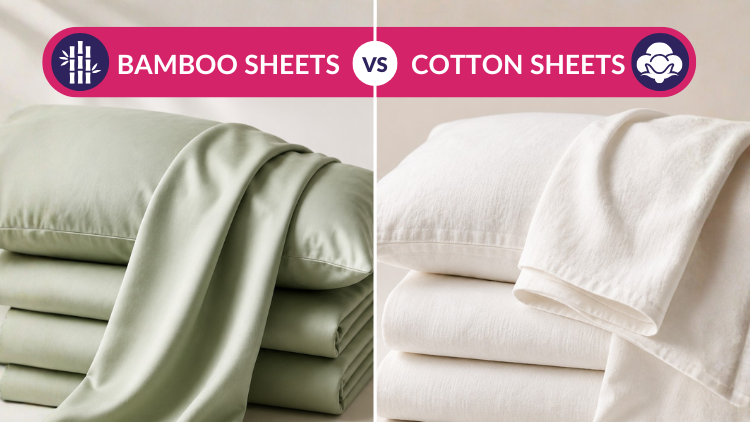
Choosing new bed sheets sounds simple until you start comparing materials. Bamboo sheets vs cotton sheets is one of the most common debates, and for good reason. Both are popular, comfortable, and widely available, but they differ in softness, breathability, durability, and overall feel.
In this guide, we compare bamboo and cotton sheets side by side to help you decide which one is the better fit for your sleep. You will learn how each material performs in different areas, from temperature regulation and moisture control to maintenance and long-term value.
What Are Bamboo Sheets?
Bamboo sheets are typically made from bamboo-derived rayon, viscose, or lyocell. The bamboo fibers are processed into a soft fabric that feels smooth and lightweight.
Many people choose bamboo sheets because they are:
- Soft and silky
- Breathable
- Moisture wicking
- Comfortable for hot sleepers
Their smooth texture also makes them popular with people who prefer bedding that feels cool throughout the night.
What Are Cotton Sheets?
Cotton sheets have been a bedroom favorite for many years. They are made from natural cotton fibers and come in several varieties.
Common types include:
- Upland cotton
- Egyptian cotton
- Pima cotton
The feel of cotton sheets depends on the quality of the cotton, the weave, and the thread count. Some feel crisp and cool, while others become softer after repeated washing.
Bamboo Sheets vs Cotton Sheets (Side by Side Comparison)
| Factor | Bamboo Sheets | Cotton Sheets |
| Feel | Silky and smooth from the first use | Crisp at first, softens with washing |
| Breathability | Strong moisture-wicking, cools quickly | Airy and breathable, slightly warmer |
| Durability | 5 to 15 years when 100% bamboo | 2 to 3 years for standard weaves |
| Wrinkling | Wrinkles visibly if left in the dryer | Wrinkles less severely, releases faster |
| Care | Cold wash, low heat, mild detergent only | Warm wash, standard dry cycle |
| Price | Generally, a higher upfront cost | Wider range, often more affordable |
| Best for | Hot sleepers, sensitive skin | Budget shoppers, all-season use |
Blissful Nights carries both fabrics across its full sheet collection, so comparing bamboo and cotton sets side by side is easy before you decide.
Softness and Feel

Bamboo-derived fabric has a naturally fine, smooth filament, which gives it a silky feel right out of the package. Cotton, especially long-staple varieties like Egyptian or Pima, starts a bit crisper but softens noticeably with each wash. If you want sheets that feel soft from the first night, bamboo has the edge. If you do not mind breaking sheets over the first few months, high-quality cotton eventually reaches a similar comfort level at a lower price point.
Breathability and Temperature Regulation
Both fabrics are considered more breathable than synthetic blends, but they cool the body differently. Bamboo fiber wicks moisture away from the skin quickly, which is why it is frequently recommended for hot sleepers and those who experience night sweats. Cotton is airy and allows good airflow, though independent sleep research notes that cotton's denser weave structure tends to retain slightly more warmth than bamboo at the same weight. For very cold bedrooms, that extra warmth from cotton can actually work in your favor.
Durability and How Long Each Fabric Lasts
Fiber quality matters more than fabric type for longevity, but bamboo generally lasts longer under normal use. A well-cared-for set of 100% bamboo sheets can last 5 to 15 years, resisting pilling better than cotton over time. Standard cotton sheets typically last 2 to 3 years before thinning or pilling becomes noticeable, though premium long-staple cotton can outlast that range with proper care. One caution with bamboo: always check for "100% bamboo" or a high bamboo percentage on the label, since low-percentage blends will not hold up as well as the marketing suggests. For a deeper look at how weave and fiber quality affect performance, see our breakdown of fabric versus thread count.
Care and Washing Differences

Cotton sheets are largely wash-and-forget. Warm water, a normal cycle, and standard detergent will keep them in good shape for years. Bamboo sheets need a gentler routine: cold or cool water, a gentle cycle, mild liquid detergent, and low heat or air drying. Skip fabric softener on bamboo sheets, since it coats the fiber and reduces the moisture-wicking that makes bamboo appealing in the first place. Bamboo also wrinkles more visibly if it sits in the dryer after the cycle ends, so pulling it out while still slightly warm helps keep it smooth.
Which Sheets Fit Your Sleep Style
Hot Sleepers
Bamboo's moisture-wicking properties make it the stronger choice if you regularly wake up warm or sweaty. The fabric pulls moisture away from the skin faster than cotton, which helps regulate body temperature through the night. Our grey bamboo cotton sheets are a popular pick for this exact use case, pairing the cooling benefit with an easy-care finish.
Sensitive Skin and Allergies
Both fabrics are gentler on skin than synthetic bedding, but bamboo has a natural edge for allergy sufferers thanks to its smooth fiber surface, which resists trapping dust and irritants. Cotton, particularly organic cotton, is also a solid hypoallergenic option if dye sensitivity is a concern.
Budget-Conscious Shoppers
Cotton sheets, particularly percale weaves, tend to cost less upfront and require no special laundry routine, which makes them the more practical everyday choice for many households.
Eco-Conscious Shoppers
Look closely at the manufacturing process rather than just the raw material. Bamboo lyocell and organic, GOTS-certified cotton are both strong sustainable picks, while standard viscose bamboo and conventionally grown cotton involve more chemical processing or water use, a distinction covered in our bed sheet material breakdown.
Final Thought
There is no single winner in the bamboo sheets vs cotton sheets debate. Bamboo wins on immediate softness, cooling, and long-term durability, while cotton wins on affordability, warmth, and low-maintenance care. The right pick depends on how warm you sleep, how much you want to spend, and how much laundry care you are willing to put in.
Find the Perfect Sheets for a Better Night's Sleep
At Blissful Nights, we offer comfortable bedding that helps create a cooler, more relaxing sleep environment. Whether you're looking for breathable bamboo sheets or other bedding essentials, our collection is designed to help you enjoy restful sleep night after night.
If you need help choosing the right sheets or bedding for your mattress and sleep style, contact us. Our team is happy to help you find the best option for your bedroom and comfort needs.
FAQs
Is bamboo or cotton better for hot sleepers?
Bamboo sheets generally perform better for hot sleepers because the fiber wicks moisture away from the body faster, helping regulate temperature through the night.
How long do bamboo sheets last compared to cotton?
A well-maintained set of 100% bamboo sheets can last 5 to 15 years, while standard cotton sheets typically last 2 to 3 years before showing wear.
Can you wash bamboo sheets the same way as cotton sheets?
No. Bamboo sheets need cold water, a gentle cycle, and low-heat drying, while cotton sheets tolerate warm water and standard drying without much risk.
Are bamboo sheets worth the higher price than cotton?
For hot sleepers, allergy sufferers, or anyone prioritizing softness and durability, bamboo's longer lifespan and cooling properties often justify the higher upfront cost.
What is the difference between thread count and fabric type for sheets?
Thread count measures weave density within a fabric, while fabric type refers to the raw material itself, so a high thread count in a lower-quality fiber will not outperform a well-made sheet with a moderate thread count.


Leave a comment
This site is protected by hCaptcha and the hCaptcha Privacy Policy and Terms of Service apply.