






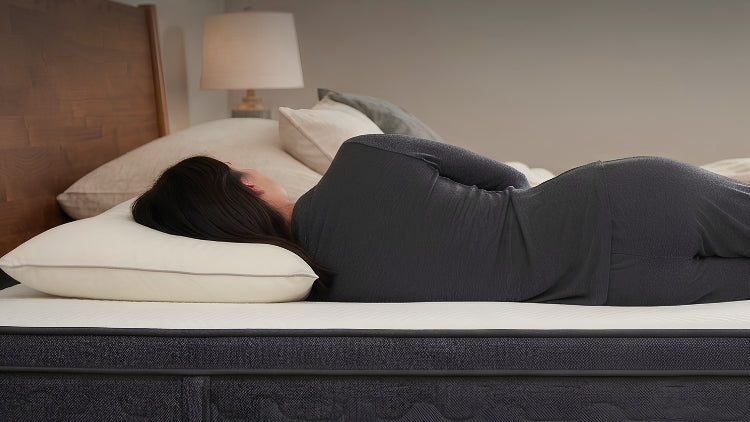
How your mattress affects spinal alignment often shows up in small, everyday signs: morning stiffness, a stubborn ache between the shoulder blades, or lower back pain that fades within the first hour of being upright. The spine has natural curves that need consistent support through the night, and a mattress that's too soft or too firm pulls those curves out of position without you ever waking up to notice.
The mattress itself, not just the pillow or your sleep position, plays one of the biggest roles in whether your spine stays neutral or gets pulled out of shape for six to eight hours a night. Once you know what firmness, material, and support actually do to your spine, choosing a setup that works with your body instead of against it gets a lot easier.
Why Spinal Alignment Matters While You Sleep
The spine isn't a straight line. It curves at the neck, mid-back, and lower back, and those curves need to stay supported no matter which position you sleep in. When a mattress lets one part of the body sink lower than the rest, the spine bends to compensate, and that bend doesn't just disappear when you wake up.
Held long enough, poor spinal posture during sleep can lead to compressed discs, irritated nerves, and stiff muscles that carry into your day. Cleveland Clinic points to sleep posture as a factor in overall alignment, and notes it can affect aches, pains, and even how easily you breathe through the night. That's part of why the mattress underneath you matters as much as how you position your body on top of it.
How Your Mattress Affects Spinal Alignment
A mattress affects spinal alignment through three things working at once: how evenly it supports your weight, how it handles pressure at your heaviest points, and how consistently it holds that support as you move through the night.
1. Support Keeps Your Spine in a Neutral Position
A mattress's core job is holding your spine in roughly the same neutral position it holds when you stand up straight, supporting the neck, mid-back, and lower back curves evenly instead of letting any one section drop or arch.
2. Pressure Distribution Prevents Compensatory Curving
When a mattress fails to cushion pressure points at the shoulders and hips, the body naturally twists or shifts to relieve that pressure, and that compensation is what pulls the spine out of line over the course of the night.
3. Consistent Contact Matters More than One Perfect Position
A mattress that keeps steady contact with the body across a range of movement matters more than one optimized for a single ideal sleep position, since most people shift positions several times a night without waking up.
How Mattress Firmness Affects Spinal Alignment
Firmness is the single biggest factor in whether a mattress keeps your spine neutral or lets it drift out of position.
When a mattress is too soft:
A mattress that's too soft allows heavier areas like the hips and shoulders to sink further than the rest of the body. For back sleepers, this creates an exaggerated curve in the lower back. For side sleepers, it can drop the hips out of line with the shoulders entirely.
When a mattress is too firm:
An overly firm surface does the opposite. It resists the body's natural curves instead of cradling them, which keeps the lower back from making proper contact with the mattress and leaves pressure points at the shoulders and hips unaddressed.
The medium-firm middle ground:
This is why medium-firm mattresses test well for most sleepers. They offer enough give to cushion pressure points while still providing the resistance needed to keep the spine level. It's not a universal rule, but it's the safest starting point for anyone unsure where to begin.
Spinal Alignment by Sleep Position
Your usual sleep position changes what "aligned" actually looks like.
-
Back sleepers need a surface that supports the lower back's natural curve without letting the hips sink lower than the shoulders, and benefits and tips for this position cover how to fine-tune that support further
-
Side sleepers need enough contouring at the shoulder and hip so the spine stays level from neck to tailbone, and doctor-backed tips for this position generally point to a slightly softer surface than back or stomach sleeping requires
-
Stomach sleepers generally need a firmer surface, since this position already puts the spine at the most risk of an unnatural arch in the lower back.
If you regularly shift between positions throughout the night, a mattress that performs reasonably well across all three is more useful than one optimized for just one.
What Mattress Material is Best for Spinal Alignment?

Firmness gets most of the attention, but the material underneath changes how that firmness actually feels against the body, and body weight changes which combination of the two works best.
-
Memory foam mattresses contour closely to the body's shape, which distributes weight evenly and reduces pressure at the shoulders and hips.
-
Hybrid constructions pair that contouring with coil support underneath, which tends to keep the spine slightly more level for combination sleepers who move between positions.
-
Traditional innerspring designs offer more bounce but less targeted contouring, which can leave gaps under the lower back for some body types.
None of these materials is universally better. The right one depends on whether you need more contouring for pressure relief or more consistent support across the whole body.
Signs Your Mattress is Misaligning Your Spine
A few patterns point to a mattress that's no longer doing its job:
- Waking up with stiffness or soreness that fades within the first hour of moving around
- A visible curve in your spine when lying on your back and having someone check your alignment from the side
- Numbness or tingling in the arms or legs after waking, which can point to pressure points rather than alignment alone
- A mattress that's visibly sagging in the middle or at the edges
- Sleeping better on a couch, guest bed, or hotel mattress than your own
Any one of these on its own isn't necessarily a red flag, but two or more together are worth paying attention to.
How an Adjustable Base Supports Better Alignment

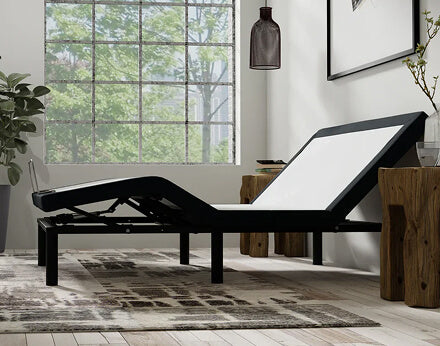
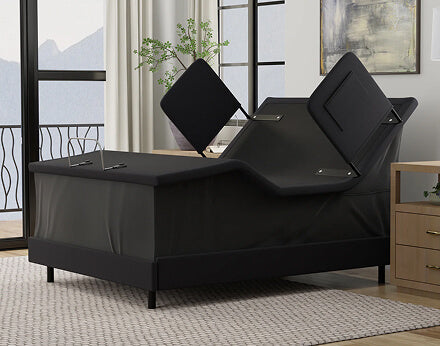
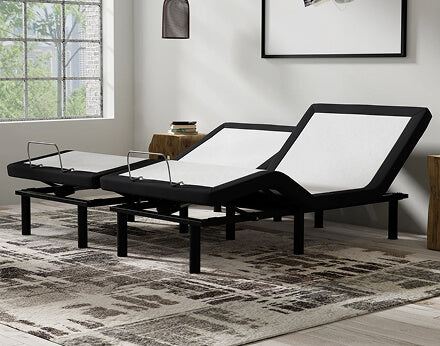
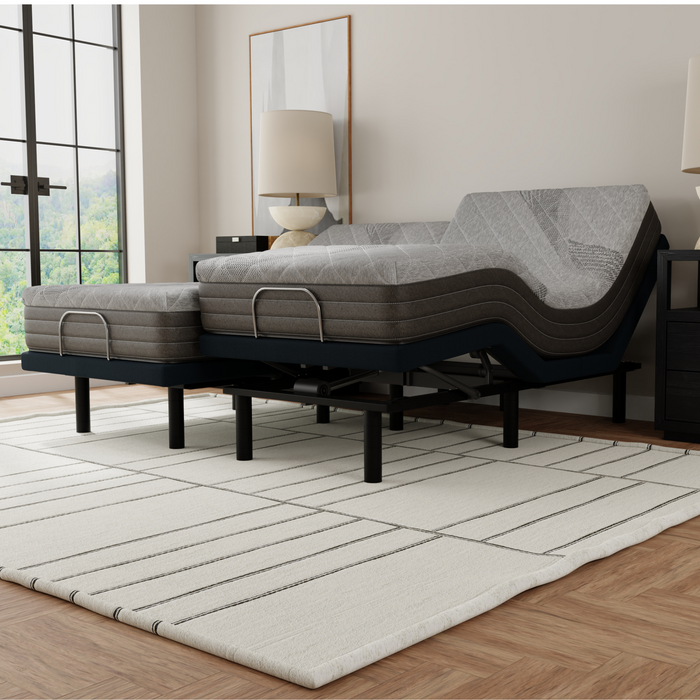
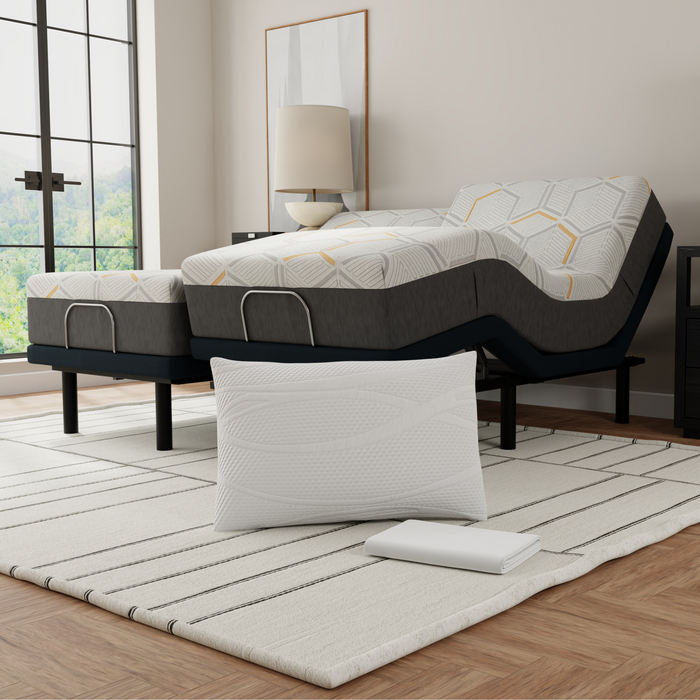
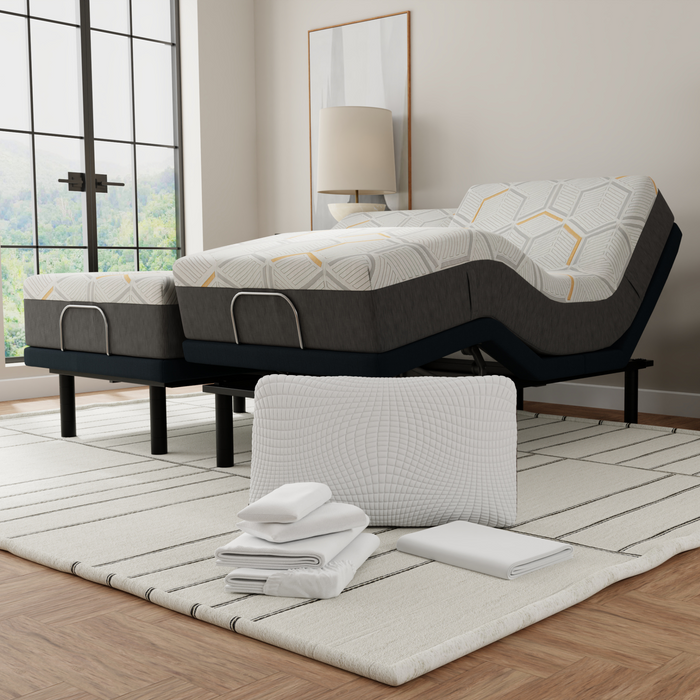
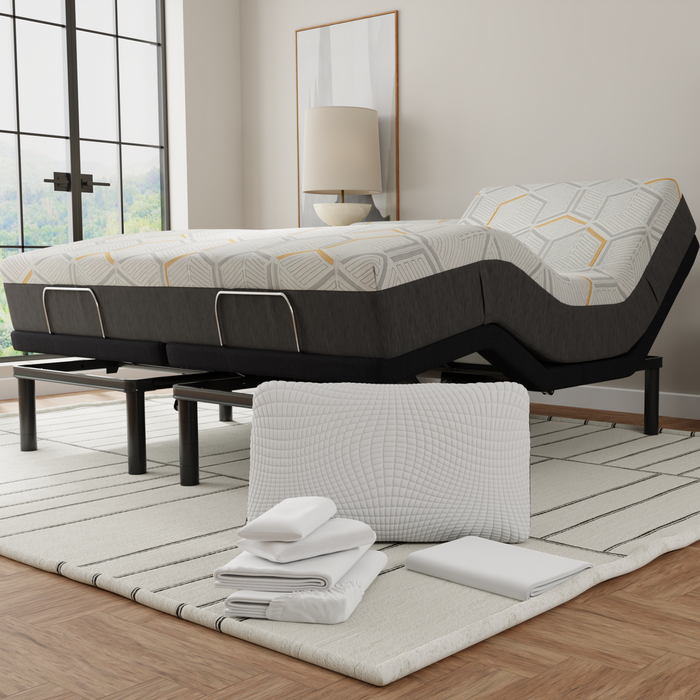
A mattress alone can only do so much. Pairing it with an adjustable bed frame adds a layer of control that a flat mattress can't offer on its own, since it lets you raise the head or foot of the bed to relieve pressure on the lower back or reduce strain on the neck.
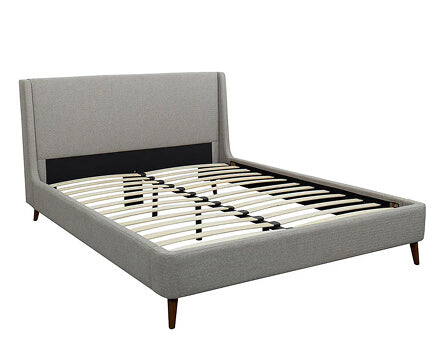
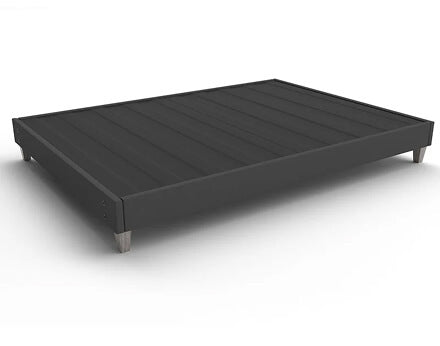
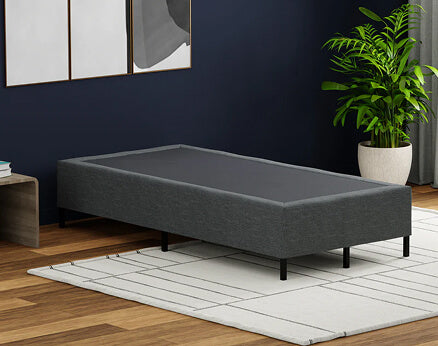
For people managing chronic back pain relief needs, slightly elevating the knees while sleeping on the back can flatten the lumbar curve and take pressure off the lower spine. A standard flat foundation can't replicate that kind of adjustment, which is part of why adjustable bases have become a common pairing with medium-firm and hybrid mattresses for people specifically managing alignment issues.
Final Thought
How your mattress affects spinal alignment comes down to two things working together: a firmness level that matches your body weight and sleep position, and a material that supports the spine's natural curves instead of fighting them. Getting either one wrong, even slightly, is often the quiet cause behind morning stiffness that never seems to have a clear explanation.
Support Your Spine with the Best Mattress from Blissful Nights
Spinal alignment starts with a mattress built to match how your body rests, not a one-size-fits-all firmness. Blissful Nights builds mattresses around real sleep positions and body types, so support lands where your spine needs it most.
Contact us to talk through your sleep position and firmness needs, and we'll help you find a mattress built to keep your spine in place all night.
FAQs
Does a firmer mattress always mean better spinal alignment?
No. A mattress that's too firm can keep the lower back from making proper contact with the surface, which creates its own alignment problem instead of solving one.
How often should I replace my mattress for spinal health?
Most mattresses lose their supportive structure within 7 to 10 years, sometimes sooner if visible sagging appears before that.
Can a pillow fix poor spinal alignment on its own?
A pillow helps with neck and cervical alignment specifically, but it can't compensate for a mattress that's letting the hips or shoulders sink out of position.
Is memory foam or hybrid better for spinal alignment?
Neither is universally better. Memory foam offers more contouring for pressure relief, while hybrid designs tend to keep the spine slightly more level for people who switch positions throughout the night.
Can an adjustable base help with existing back pain?
Yes, for many people. Elevating the knees or upper body can reduce pressure on the lower back and neck in ways a flat mattress alone cannot.


Leave a comment
This site is protected by hCaptcha and the hCaptcha Privacy Policy and Terms of Service apply.