





Key Takeaways
- The best feng shui bedroom layout puts the bed in the commanding position. You can see the door from your pillow, but the bed isn't lined up with it.
- Set the headboard against a solid wall and leave room to walk around both sides. Matching nightstands help the room feel balanced.
- Skip the coffin position (feet pointing out the door), keep the bed out from under beams and windows, and don't let a mirror reflect you while you sleep.
- The bagua map is a decor guide, not a set of rules. Start with the love corner and the middle of the room.
- Screens and work piles make it harder to switch off. A cool, dark room around 65°F helps too.
- Awkward rooms usually have an easy fix, but no layout can save a mattress that's past its prime.
You've moved the bed twice, bought new pillows, maybe even repainted, and you still wake up feeling a little off. Sometimes the culprit is the layout. A feng shui bedroom layout is about how the bed sits in relation to the door, the windows, and everything else in the room, so the space feels safe the minute you lie down.
We'll cover the rules most practitioners agree on, the bagua map in plain English, and fixes for small rooms and tricky windows. There's also a setup order you can knock out in an afternoon, plus a few words on the bed itself, because placement only gets you so far.
What Is a Feng Shui Bedroom Layout?
Feng shui is a Chinese design practice built around chi, the energy that moves through a space. A bedroom should slow that energy down. You want it restful (yin), not busy (yang).
Day to day, a feng shui bedroom layout means the bed sits where you feel protected, you can move around without bumping into things, and the decor says "rest" instead of "to-do list." A lot of this overlaps with plain sleep advice anyway: keep it dark and quiet, and keep the clutter down.
What Is the Best Feng Shui Bedroom Layout?
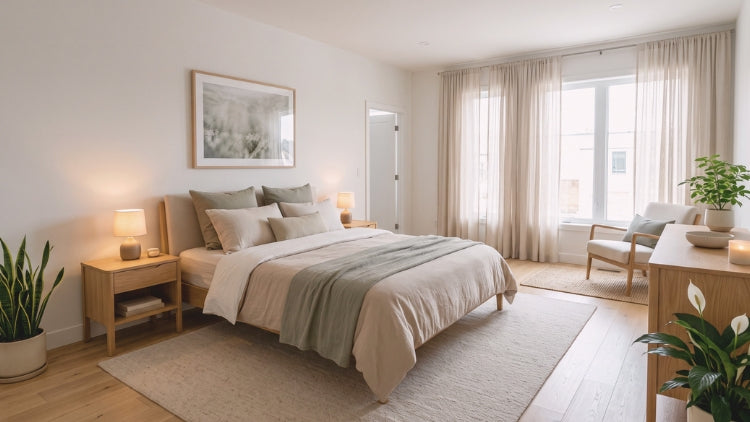
The best feng shui bedroom layout puts the bed in a commanding position: diagonal from the door, where you can see who walks in but aren't directly in line with the doorway. Back the headboard against a solid wall, with a nightstand and some breathing room on each side.
- You can see the door from your pillow, but the bed isn't in its path
- A solid wall sits behind the headboard, not a window
- You can walk around both sides, ideally with about 18 inches of clearance
- The nightstands and lamps match
- Only soft linens go under the bed (or nothing at all)
- No mirror reflects you in bed
How to Place Your Bed in the Commanding Position

Place the bed first, then arrange everything else around it. Feng shui teacher Anjie Cho explains that seeing the door without lying in its path helps you relax enough to sleep deeply. It makes sense on a gut level, too, since most people don't love having their back to an entrance.
Can't face a "lucky" compass direction? Don't worry about it. Classic feng shui placement guidance puts the bed's relationship to the door ahead of which way it points.
Back Your Bed With a Solid Wall and Headboard
A solid wall behind your head feels supportive, physically and visually. A window doesn't give you that, and a wall shared with a bathroom or a loud hallway isn't much better. Go with a sturdy wood or upholstered headboard, since open metal bars and thin slats don't feel as protective.
Avoid the Coffin Position and Heavy Overhead Features
The coffin position is when your feet point straight out the door. Almost every practitioner warns against it (the name doesn't help). If the room won't let you move the bed, a bench or storage chest at the foot of the bed gives you a buffer.
Look up, too. A beam, sloped ceiling, ceiling fan, or heavy light fixture right over the bed can feel like it's pressing down on you. When you can't relocate, a canopy or a length of fabric hung under the beam softens the edge.
Feng Shui Bedroom Layout Rules for Furniture
Once the bed is in place, the rest of the furniture should stay out of its way. Bedroom furniture feng shui isn't complicated: use fewer pieces, pick softer edges where you can, and leave some floor showing.
Nightstands and Symmetry
Two matching nightstands with matching lamps make the room feel balanced, and feng shui ties that balance to steady relationships. Sleep alone? Set it up for two anyway, because a one-sided room tends to feel a bit lopsided.
Rounded tables are a good call. Feng shui calls sharp corners pointed at the bed "poison arrows," so if yours have hard edges, turn them slightly or set a small plant at the corner.
Mirrors, Desks, and Electronics
Mirrors shouldn't reflect you in bed. The inside of a closet door works, or any wall the bed doesn't face. A desk is easier to live with in a corner you can't see from your pillow, or tucked behind a folding screen.
Phones and TVs keep your brain switched on. Charge your phone across the room, and maybe trade the late show for a book.
What to Keep Under the Bed
Feng shui prefers an empty space under the bed so energy can move while you sleep. If you need the storage, use closed bins and stick to soft things like spare sheets and blankets. Shoes, paperwork, and boxes of old keepsakes belong somewhere else.
How to Use a Feng Shui Bedroom Map
The bagua is a grid of nine areas, and each one maps to a part of life. In the Western method, you lay it over your floor plan with the door along the bottom edge. That turns it into a feng shui bedroom map you can use to decide what goes where.
|
Bagua Area |
Location (Door at Bottom) |
Life Area |
Bedroom Ideas |
|
Love and Relationships |
Back right |
Partnership |
Pairs of things, soft pinks or earth tones |
|
Fame and Reputation |
Back center |
Recognition |
The headboard wall, a red accent, candles |
|
Wealth |
Back left |
Abundance |
A healthy plant, green or purple touches |
|
Family |
Middle left |
Roots, support |
Wood furniture, small family-friendly art |
|
Center |
Middle |
Health, balance |
Leave it open and clear |
|
Creativity |
Middle right |
Joy, projects |
White or metal accents, art that makes you smile |
|
Knowledge |
Front left |
Self-growth |
Books, a reading chair |
|
Career |
Front center |
Life path |
A clear entry, simple art by the door |
|
Helpful People |
Front right |
Support, travel |
Gray or metallic details |
Use this feng shui bedroom chart loosely. You don't have to fill all nine areas. Start with the love corner and the middle of the room, since those two have the most say in how the bedroom feels.
Colors, Lighting, and Air That Support Rest
Colors you'd find outdoors work best in a good feng shui bedroom: soft blues, sage green, warm neutrals, earthy browns. Red is great in small doses, like a throw pillow, but a red accent wall is a lot to wake up to. For light, bedside lamps on dimmers beat one bright fixture over the bed.
Temperature and darkness count as much as paint color. Sleep Foundation guidance on bedroom environment notes that many experts put the ideal sleep temperature at about 65°F. Blackout curtains help, so does cracking a window when the weather allows, and a plant or two brings in the wood element.
How to Fix Tricky Bedroom Layouts
Most bedrooms weren't designed with feng shui in mind, and that's fine. When the ideal spot isn't available, these fixes get you most of the way there.
|
Layout Problem |
Why It Matters |
Simple Fix |
|
Bed in line with the door |
Energy rushes straight at the sleeper |
Shift the bed off the door line and put a bench or rug at the foot |
|
Bed under a window |
Little support behind your head |
Use a tall, solid headboard and close heavy curtains at night |
|
Two windows facing each other |
Energy runs straight through the room |
Close the curtains at night and set a chair or plant between them |
|
Bathroom door facing the bed |
Thought to drain energy |
Keep the door shut and hang a curtain or add a plant as a buffer |
|
Door not visible from the bed |
Feels unsettling |
Angle a mirror so it shows the door without reflecting the bed |
|
Sloped ceiling or beam |
Feels heavy over the sleeper |
Put the bed under the higher side or add a canopy |
|
Very small room |
The bed may have to touch a side wall |
Keep one side open and use wall-mounted lights to save floor space |
Common Feng Shui Bedroom Layout Mistakes to Avoid

Most bedrooms that feel off have at least one of these going on:
- The bed is pushed into a corner, so only one person can get out easily
- Heavy art or shelves hang right over the headboard
- The TV or desk is the first thing you see from bed
- A mirror catches your reflection at night
- The nightstands and corners have quietly turned into storage
- The room looks great, but the mattress is worn out
A Step-by-Step Feng Shui Bedroom Setup
Work through it in this order so each choice builds on the one before. It's a basic feng shui bedroom planner, and most people finish in an afternoon.
- Take out everything you can, including whatever's under the bed.
- Note where the door, windows, beams, and sloped ceilings are.
- Put the bed in the commanding position against a solid wall.
- Add matching nightstands and lamps on both sides.
- Place dressers, desks, and mirrors so none of them face the bed head-on.
- Lay the bagua map over the room and add decor to the areas you care about most.
- Finish with calm bedding, blackout curtains, and a plant or two.
- Sleep in the new setup for a week, then fix whatever still bugs you.
Final Thoughts
A good feng shui bedroom layout starts with the bed. Get it into the commanding position against a solid wall, with the door in view, and the rest of the room gets easier. Matching nightstands, softer colors, and a clear floor handle a lot of what's left, and most awkward windows or doors have a workaround. After that, make sure the bed itself is one you actually want to climb into.
Create a Better Sleep Environment
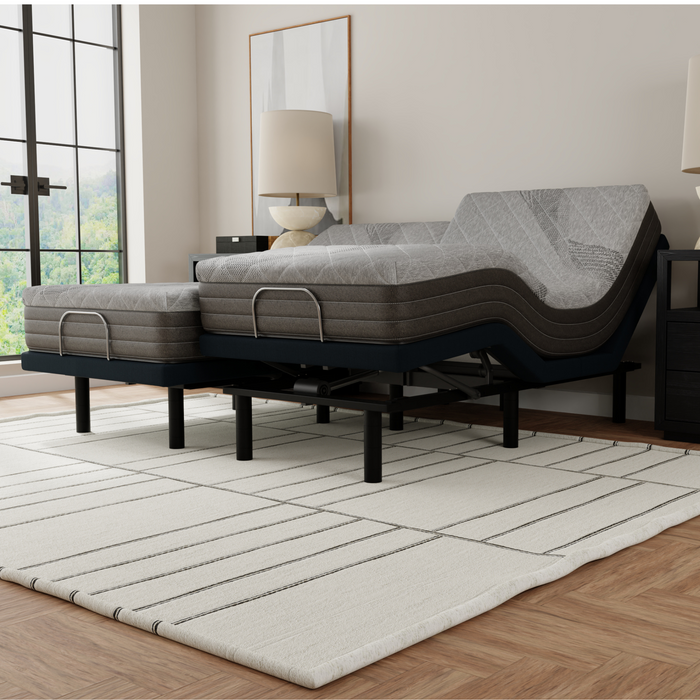
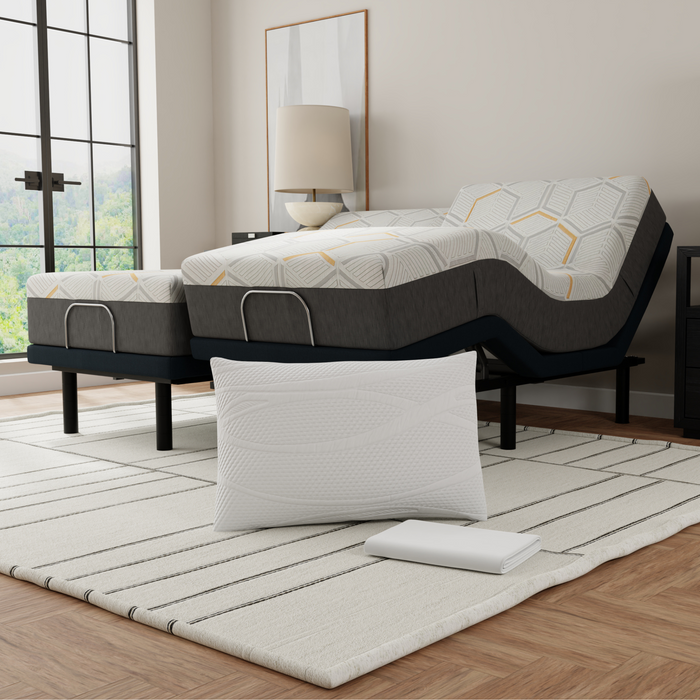
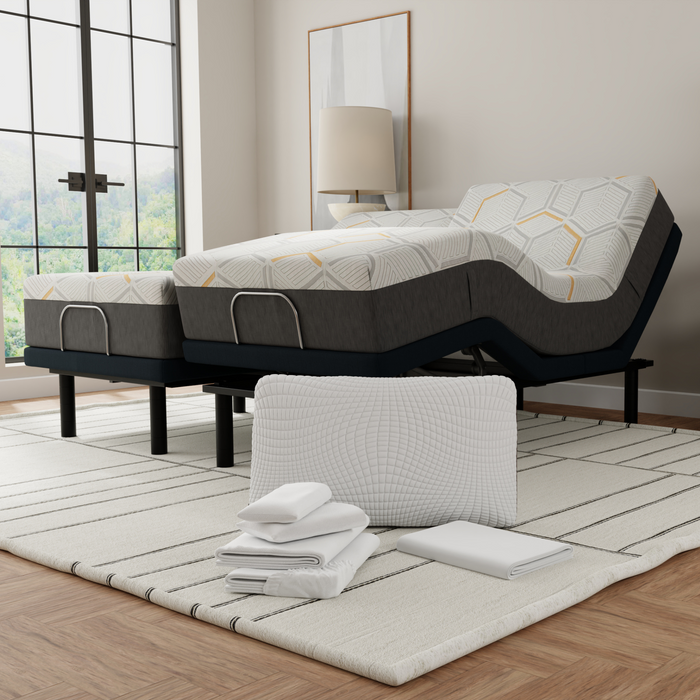
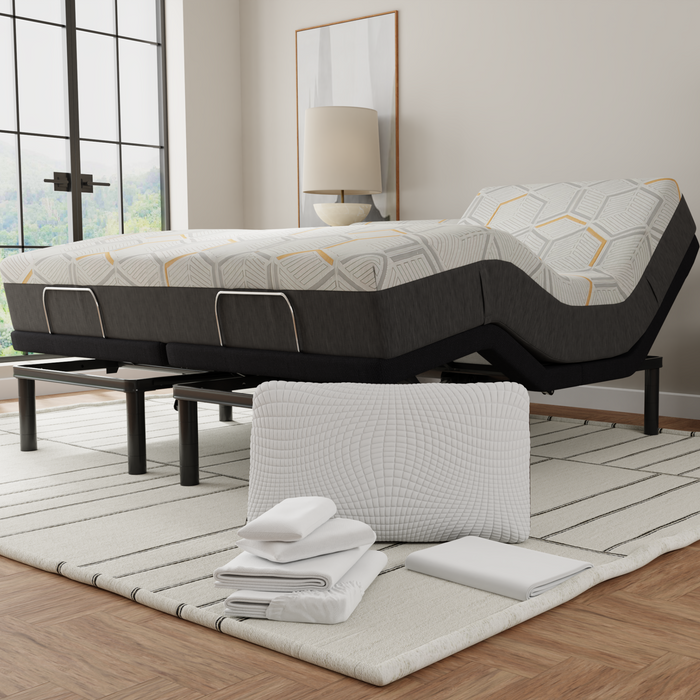
Getting enough sleep starts with having a comfortable place to rest each night. Visit Blissful Nights and explore our collection of mattresses and adjustable beds to find sleep options that fit your comfort and sleep needs.
Looking for help choosing the right setup? Contact us today, and our team can help you find an option for better, more comfortable nights.
FAQs
Which Direction Should My Bed Face in Feng Shui?
Where the bed sits in relation to the door matters more than compass direction. Get the commanding position right first, and only think about direction if you have two equally good walls to choose from.
Can I Put My Bed Under a Window?
You can, but it's not ideal, since a window doesn't give you the support a solid wall does. If it's the only spot that works, pick a tall, solid headboard and close heavy curtains at night.
Is a Mirror Facing the Bed Bad Feng Shui?
Most practitioners say yes. If a mirror reflects you in bed, move it to another wall, angle it away, or throw a cloth over it at night.
How Do I Feng Shui a Small Bedroom?
Keep at least one side of the bed open and choose a frame that fits the room. Wall-mounted lights and closed storage free up floor space, which makes a small room feel a lot less cramped.
Does Feng Shui Really Improve Sleep?
Feng shui is a tradition, not a proven science. Still, a lot of its advice lines up with sleep research: a dark, cool, quiet room without clutter, and a bed you find comfortable. Follow it and you end up with a calmer bedroom either way.



Leave a comment
This site is protected by hCaptcha and the hCaptcha Privacy Policy and Terms of Service apply.