






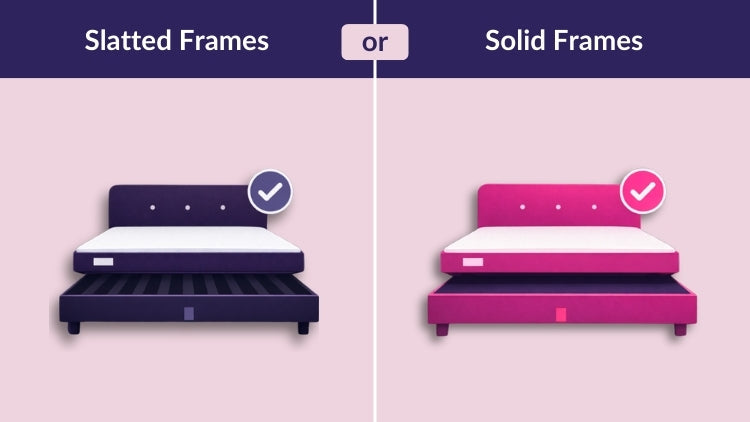
Support, airflow, durability, and even mattress lifespan are all affected by what’s underneath the bed. Sleep specialists and mattress manufacturers often point out that improper bed support can lead to sagging, poor spinal alignment, and reduced comfort over time. The right frame can help your mattress perform as it’s designed to, while the wrong one can quietly shorten its lifespan.
In this guide, we’ll break down whether slatted frames or solid frames support mattresses better, including the pros and cons of each, how they affect different mattress types, and what to consider when choosing the best option for long-term comfort and support.
What Is a Slatted Bed Frame?

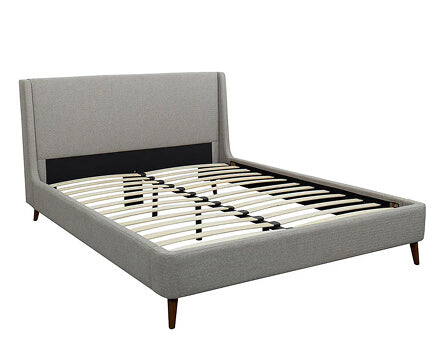
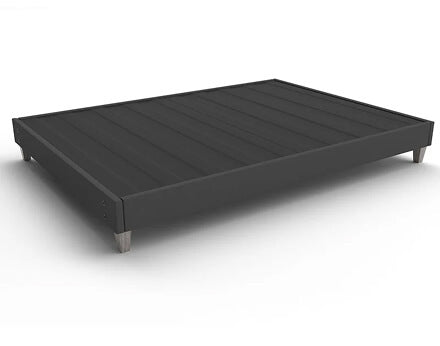
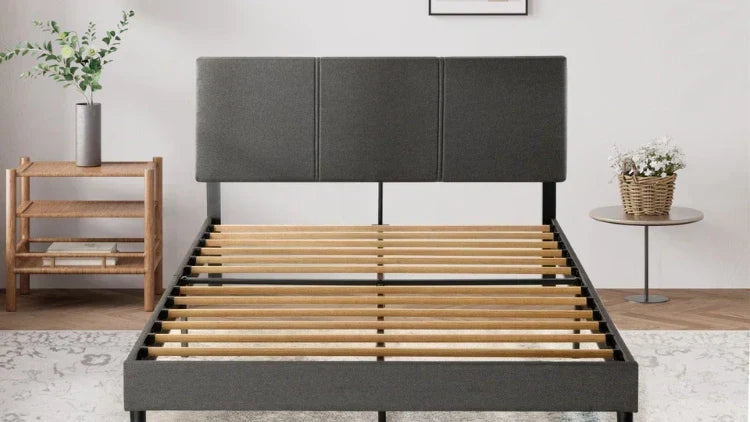
A slatted bed frame has horizontal slats, usually made of wood or metal, that run across the bed. Your mattress sits directly on top of those slats.
There are two common types:
-
Solid slats that are flat and firm
-
Sprung slats that curve slightly and flex a bit
Slatted frames are popular because they allow airflow under the mattress. That extra ventilation can help with heat and moisture, especially if you sleep hot.
But here is the key. Slats must be spaced correctly. Wide gaps between slats can cause sagging, especially with memory foam and hybrid mattresses.
What Is a Solid Bed Frame?

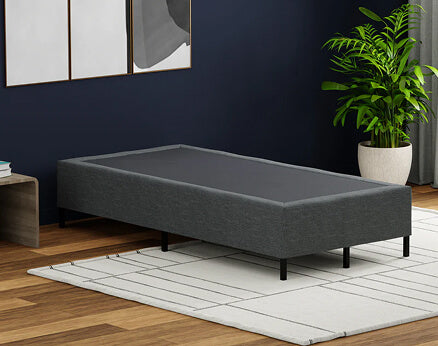
A solid bed frame, often called a platform bed, uses a flat surface across the entire base. Instead of gaps like slats, the mattress rests on one continuous layer.
Because the surface is even, it provides consistent mattress support from edge to edge. There are no spaces for the mattress to sink into.
There are a few common types:
-
Solid wood platform that uses full wood panels or tightly joined boards
-
Plywood or engineered wood base, which creates a smooth, flat surface at a lower cost
-
A metal platform bed frame that may use a solid metal panel or a very tightly spaced metal grid
-
Upholstered platform bed with solid decking, which looks soft on the outside but has a firm wooden base underneath
Many people choose a solid platform bed because it feels stable and secure. Support is consistent across the entire mattress. The main downside is airflow. Because the base is more closed, air does not circulate as freely beneath it as it does under a slatted bed frame.
Slatted vs Solid Bed Frame: Pros and Cons
| Bed Frame Type | Pros | Cons |
| Slatted Bed Frame |
|
|
| Solid Bed Frame (Platform Bed) |
|
|
Slatted vs Solid Bed Bases: Main Differences
At first glance, slatted and solid bed bases look similar. They both hold your mattress off the floor. But the way they support your mattress is very different.
Here are the main differences in simple terms:
| Feature | Slatted Bed Base | Solid Bed Base |
| Surface | Slats with gaps | Flat, full surface |
| Airflow | Good airflow | Less airflow |
| Support | Depends on slat spacing | Even support across the whole bed |
| Sagging Risk | Higher if the slats are far apart | Lower because there are no gaps |
| Feel | Can feel slightly flexible | Feels stable and firm |
Which Supports a Mattress Better?
When it comes to pure support, a solid bed base usually wins because it provides even support across the entire mattress. There are no gaps that could cause a dip.
But that does not mean slatted bases are bad.
A well-built slatted bed base with tight slat spacing can support a mattress just as well as a solid one. The key detail is spacing. For memory foam and hybrid mattresses, slats should usually be around 2 to 3 inches apart. Wider gaps can lead to sagging over time.
So the real answer is this:
-
If you want the simplest, lowest-risk option for mattress support, choose a solid platform bed.
-
If you prefer better airflow and a lighter frame, choose slats, but ensure they are strong and closely spaced.
What really matters is how strong and well-made the bed base is, not whether it is called slatted or solid.
Final Thought
In the end, do slatted frames or solid frames support mattresses better? Both can perform well if built properly. Slats need to be close together and strong, while solid bases need to be flat and firm. What really matters is that your mattress stays level and fully supported without sagging. If you follow a simple bed frame guide and choose a stable, well-made base, your mattress will last longer and feel better over time.
Choose the Right Support for your Mattress
Choosing the right support makes a big difference in how your mattress feels and how long it lasts. At Blissful Nights, we offer sturdy bed frames for sale designed to keep your mattress level and well-supported.
Contact us now and find the perfect base for your bed, and enjoy better sleep every night with Blissful Nights.
FAQs
Which supports a mattress better, slats or a solid base?
A solid base gives even support across the whole mattress. Slats can support just as well if they are strong and spaced closely together.
How far apart should bed slats be?
For most foam and hybrid mattresses, slats should be about 2 to 3 inches apart.
Can wide slat gaps cause mattress sagging?
Yes. If slats are too far apart, the mattress can dip between them and sag over time.
Do you need a box spring with a slatted or solid bed frame?
Most modern mattresses do not need a box spring if the slats or solid base provide proper support.
Does a solid bed frame make a mattress last longer?
It can help, because even support reduces the risk of sagging and uneven wear.


Leave a comment
This site is protected by hCaptcha and the hCaptcha Privacy Policy and Terms of Service apply.